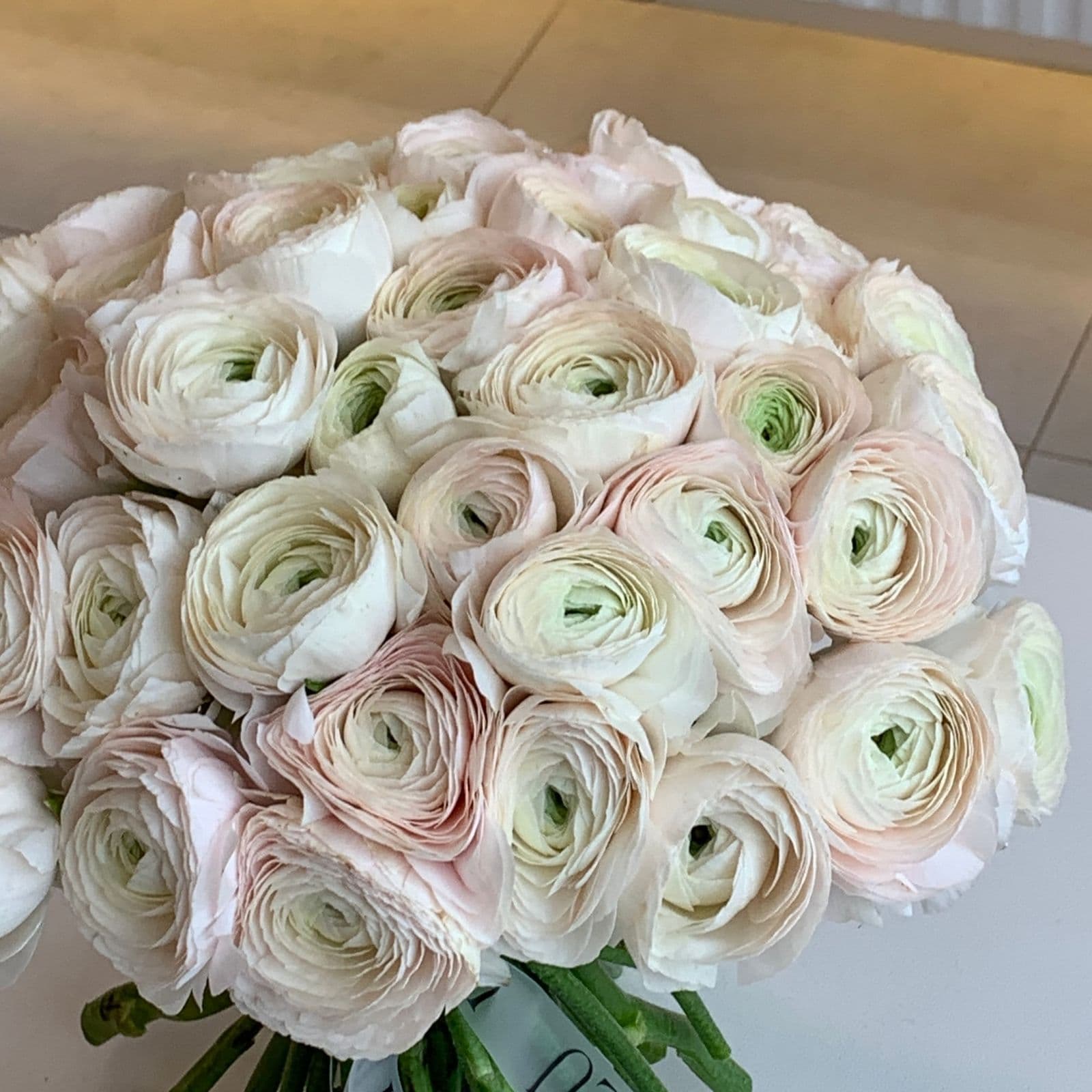
Ranunculus is often mistaken for a peony or a rose: dozens of thin, paper-like petals folded into a tight sphere. Behind that delicacy lies a story that runs from the mountains of Asia Minor to the sultans’ gardens and the flower shows of Europe.
Where ranunculus comes from
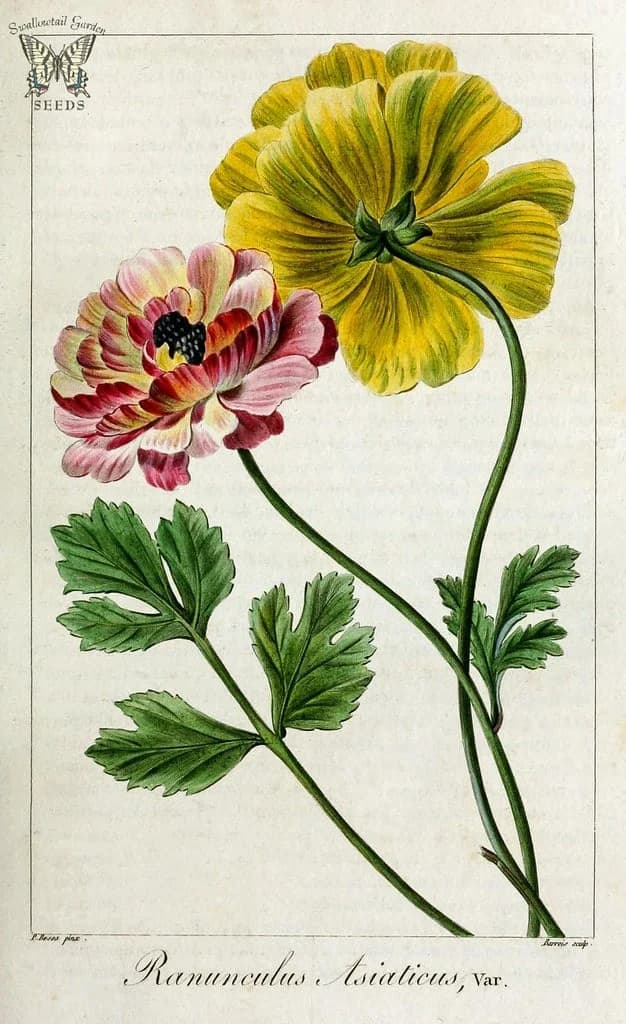
The garden ranunculus is Ranunculus asiaticus, the Persian buttercup. In the wild it grows in the eastern Mediterranean and Western Asia — Turkey, Crete, Syria, Iran. Wild flowers are very simple, with five red, white or yellow petals; only centuries of breeding turned them into the lush “pom-poms” we know today.
Why “little frog”
The name comes from the Latin rana, “frog”. Ranunculus means “little frog”: many species of the genus grow near water, in wet meadows and marshes where frogs live. The name goes back to the Roman naturalist Pliny the Elder. So our refined bouquet ranunculus is a distant relative of the ordinary meadow buttercup.
The legend of the Persian prince
A Persian legend tells of a young prince who always dressed in green and gold. He fell in love with a nymph and sang to her every evening, but she never returned his love. The prince faded away from longing, and where he used to sing a flower grew, dressed in green with hundreds of delicate petals — the ranunculus. That is why, in the language of flowers, it still means admiration: “you are charming”.
From the sultans’ gardens to Europe
Ranunculus found real fame in the Ottoman Empire. In the 16th and 17th centuries it was admired at the sultan’s court as much as the tulip: gardeners bred new shades, and the finest varieties were given their own poetic names.
Through Constantinople the tubers reached Europe — first France and Italy, later England and the Netherlands. By the 18th century ranunculus was one of the favourite “florists’ flowers”: enthusiasts grew hundreds of varieties and competed at flower shows for the most perfect shape and colour.
Ranunculus today
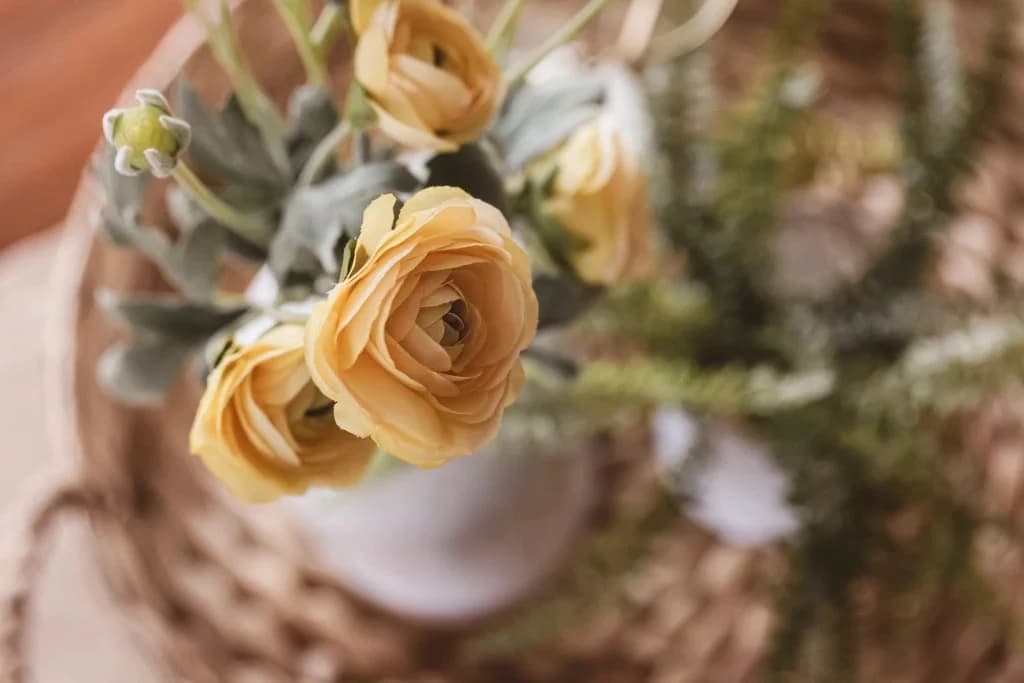
Modern varieties are grown in Italy, Israel, Japan and the Netherlands. Breeders have created flowers with petals as thin as paper and up to 8–10 centimetres across, from milky white to deep bordeaux, as well as soft bicolours. The natural ranunculus season runs from late autumn to spring, which makes it especially fitting for winter bouquets.
Caring for ranunculus
- Ranunculus stems are hollow and delicate — use only 5–7 cm of cool water in the vase.
- Trim the stems with sharp secateurs and change the water every day.
- Keep the bouquet somewhere cool, away from radiators and fruit.
- Don’t worry about tight buds: within 2–3 days they open and last up to a week.
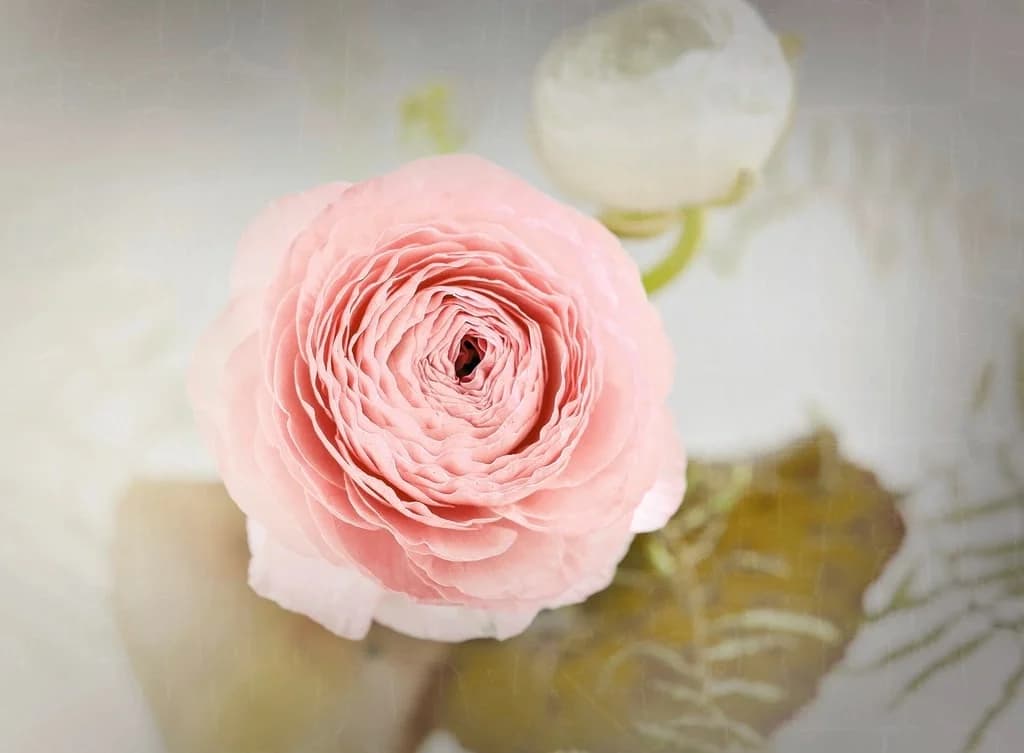
Looking for ranunculus in a bouquet? Message us — we’ll tell you which shades we have this week.